Can Blockchain Improve the Trustworthiness of Digital Credentials?
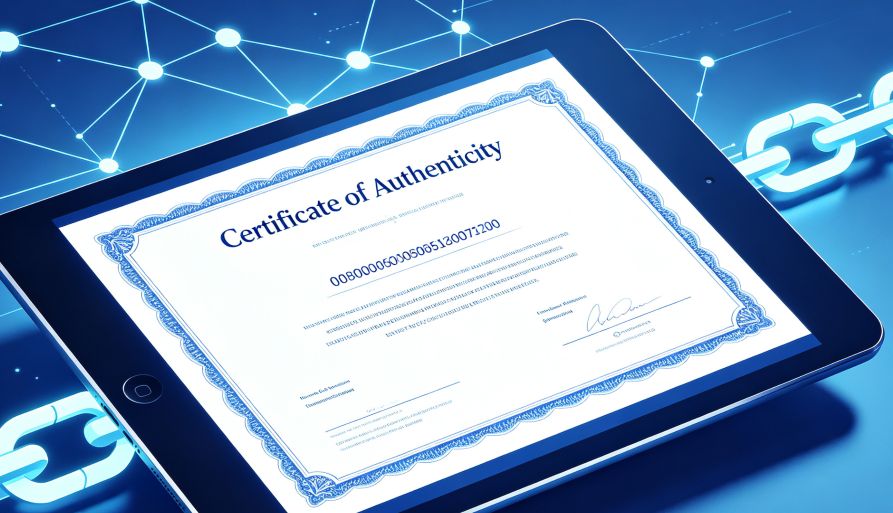
More than 64 percent of Americans have admitted to lying on a resume at least once, according to research from Resume Builder. Education claims are a common target, with roughly a third of applicants misrepresenting a degree, a certification, or a GPA. As hiring moves online and remote work erodes the informal checks that used to catch these lies, employers and job seekers alike are asking a practical question: how can anyone trust a credential they cannot physically inspect?
The pressure is compounding. Job seekers now lean on AI tools to tailor applications at a scale that was unthinkable a decade ago, and platforms like Reztune can rewrite a resume for a specific role in minutes. That speed is genuinely useful for candidates, but it also means employers are reviewing more polished documents than ever, with less time to verify what is actually true. A faster application process without a faster verification process is a mismatch, and it is one reason interest in tamper-resistant credentialing has grown.
The Case for Blockchain-Based Verification
Blockchain’s core appeal here is straightforward. A credential recorded on a distributed ledger is cryptographically signed, time stamped, and extremely difficult to alter afterward. Instead of an employer calling a registrar and waiting weeks for a reply, a verifier can check authenticity almost instantly against the ledger itself.
The idea already has a track record. The University of Nicosia became the first institution to issue academic certificates on the Bitcoin blockchain in 2015, and it has issued all of its diplomas that way since 2017. Around the same period, the MIT Media Lab developed Blockcerts, an open standard for issuing and verifying blockchain-anchored credentials that other institutions have since adopted. National-level pilots are underway too, with credential verification initiatives reported in Malaysia and India, according to research published on arXiv.
Supporters point to a few concrete benefits. Verification that once took weeks can happen in seconds, since the ledger itself acts as the record of truth. Diploma mills and forged certificates become harder to pass off as genuine, because a fabricated credential simply will not match any entry on the chain. And because verification does not depend on a single, central database, students and workers who move between countries or change jobs frequently can carry a portable, permanent record of their achievements rather than repeatedly requesting paper transcripts.
Where the Concept Runs Into Friction
None of this comes free of complications, and the honest version of this story includes them. Interoperability is probably the biggest one. Research on the Blockchain Academic Credential Interoperability Protocol, published on arXiv, notes that meaningful cross-system verification depends on shared technical standards, particularly Decentralized Identifiers and Verifiable Credentials from the World Wide Web Consortium. Without common formats, a credential issued on one blockchain network may not be readable, or trusted, by a system built on a different one. Analysis from GS1 points out that although W3C standards for verifiable credentials have existed for roughly a decade, no single approach has achieved dominant, universal adoption, so many implementations remain siloed from each other.
Privacy raises a separate set of questions. Blockchains are prized for transparency, but transparency and personal data protection can pull in opposite directions, especially under regulations like the EU’s GDPR or the United States’ FERPA for student records. Researchers behind a zero-knowledge academic verification system, published through the National Center for Biotechnology Information, argue that credential platforms need privacy-preserving techniques capable of confirming a qualification is genuine without exposing the underlying personal data behind it.
Then there is plain practicality. Many prospective users are unfamiliar with blockchain technology or digital wallets, and losing a private cryptographic key can mean permanently losing access to a credential, a risk with no simple fix in most current systems, according to analysis from Certopus. Institutions also have to weigh the cost of overhauling established credentialing processes against the benefits, which slows adoption even where the technology works well.
Where This Intersects With AI-Assisted Hiring
The rise of resume-tailoring software adds another layer to this conversation. Tools that help candidates present their genuine experience clearly and persuasively are not the problem. The problem is that faster, slicker applications make it harder for a hiring manager to distinguish a well-presented true claim from a well-presented false one just by reading the page. A verified, blockchain-anchored credential attached to an application would let employers confirm the substance behind the polish without slowing down the process that AI tools were meant to speed up in the first place. That pairing, better-written applications matched with instantly verifiable claims, is where much of the near-term value could sit.
This shift is not limited to formal credentials either. The broader practice of online reputation management is moving in a similar direction, with platforms increasingly relying on verifiable, tamper-resistant records rather than self-reported claims to establish trust. Credentials and reputation are converging on the same underlying idea: trust that can be independently checked is worth more than trust that has to be taken on faith.
A Balanced Path Forward
Blockchain will not, by itself, fix credential fraud. It offers a genuinely stronger foundation for tamper resistance and instant verification, but its value depends on solving the less glamorous problems of shared standards, privacy-by-design architecture, and user-friendly access. Regulatory momentum, including the EU’s push toward digital identity wallets under eIDAS 2.0, suggests some of that groundwork is beginning to fall into place. Whether blockchain becomes the quiet infrastructure behind everyday hiring and admissions, or one option among several competing standards, will likely depend less on the technology itself and more on whether institutions, employers, and regulators can agree on how to use it together.