Skip to content

Creator Chain

blockchain technology

How Blockchain could Redefine Trust in CS2 Match Win Boosting?

    The demand for CS2 match win boosts continues to expand as players seek faster ways to climb competitive ranks and unlock higher-tier gameplay. However, alongside this growth comes a persistent issue: trust. Questions around account safety, service legitimacy, and result verification remain central concerns in the boosting ecosystem.

    As the market matures, a new approach is emerging, one that does not rely solely on reputation or manual tracking. Blockchain technology, when applied outside of cryptocurrency use cases, offers a framework for transparency, accountability, and verifiable outcomes.

    The Trust Problem in Boosting Services

    Traditional boosting services often operate on a trust-based model. Players purchase a service, provide account access or coordination details, and rely on the provider to deliver the promised results. While many services are legitimate, the system itself leaves room for disputes. Some of the most common issues include:

    • Unverified claims of completed matches
    • Discrepancies between promised and actual rank progression
    • Lack of clear service logs or proof of performance
    • Concerns about account misuse or unauthorized access

    Without a standardized verification mechanism, players must depend on screenshots, communication logs, or reputation, none of which are fully tamper-proof.

    Blockchain Serving as Digital Trust

    Blockchain introduces a fundamentally different model: immutable record-keeping. Instead of storing data in centralized systems that can be altered or disputed, blockchain-based frameworks record transactions and events in a decentralized ledger.

    Applied to CS2 boosting services, this means every boost session could be logged with:

    • Match identifiers
    • Timestamps
    • Verified outcomes (win/loss, rank changes)
    • Service milestones

    Once recorded, this data cannot be modified retroactively. This creates a tamper-resistant audit trail, allowing both players and providers to reference a single, trusted source of truth.

    Importantly, this use of blockchain does not involve cryptocurrency, it functions purely as a verification infrastructure.

    Automated Accountability Created by Smart Contracts

    Another key innovation lies in smart contracts, which can be used as automated service agreements. In this context, they define the conditions under which a boosting service is considered complete. To give you an example, a smart contract could specify:

    • A target rank or number of match wins
    • Timeframe completion
    • Verification criteria based on recorded match data

    The system would automatically validate whether these conditions have been met. Only then would the service be marked as complete.

    This removes ambiguity and reduces the need for manual dispute resolution. Both parties operate within a predefined, transparent framework where outcomes are objectively verified.

    Improving Security while Eliminating Risk

    Blockchain-backed systems also contribute to improved security. By minimizing reliance on centralized tracking and unverifiable reporting, they reduce opportunities for manipulation or fraud. When it comes to a blockchain-integrated boosting model:

    • Players can verify progress without exposing sensitive account data unnecessarily
    • Providers can demonstrate legitimacy through verifiable performance records
    • Disputes can be resolved using transparent, immutable data

    This creates a more balanced ecosystem where both sides are protected by the same infrastructure.

    Elevating Standards in the Booster Market

    The introduction of blockchain-based verification has broader implications for the boosting industry. It shifts the market from reputation-based trust to system-based trust, where credibility is built on verifiable data rather than claims. If this concept is applied, then it is likely to lead to:

    • Higher service standards
    • Greater accountability among providers
    • Increased confidence for players entering the market
    • Reduced friction in transactions and service validation

    As more platforms adopt similar frameworks, transparency may become a baseline expectation rather than a differentiator.

    From Trust to Verification

    CS2 match win boosting is part of a rapidly evolving gaming services landscape. While demand continues to grow, the need for reliable, transparent systems becomes increasingly critical.

    Blockchain technology offers a practical solution, not as a financial tool, but as a digital trust layer. By enabling immutable records, automated agreements, and verifiable outcomes, it addresses many of the core challenges facing the booster ecosystem.

    For players and providers alike, this represents a shift toward a more structured and accountable model, where trust is no longer assumed, but proven through data.
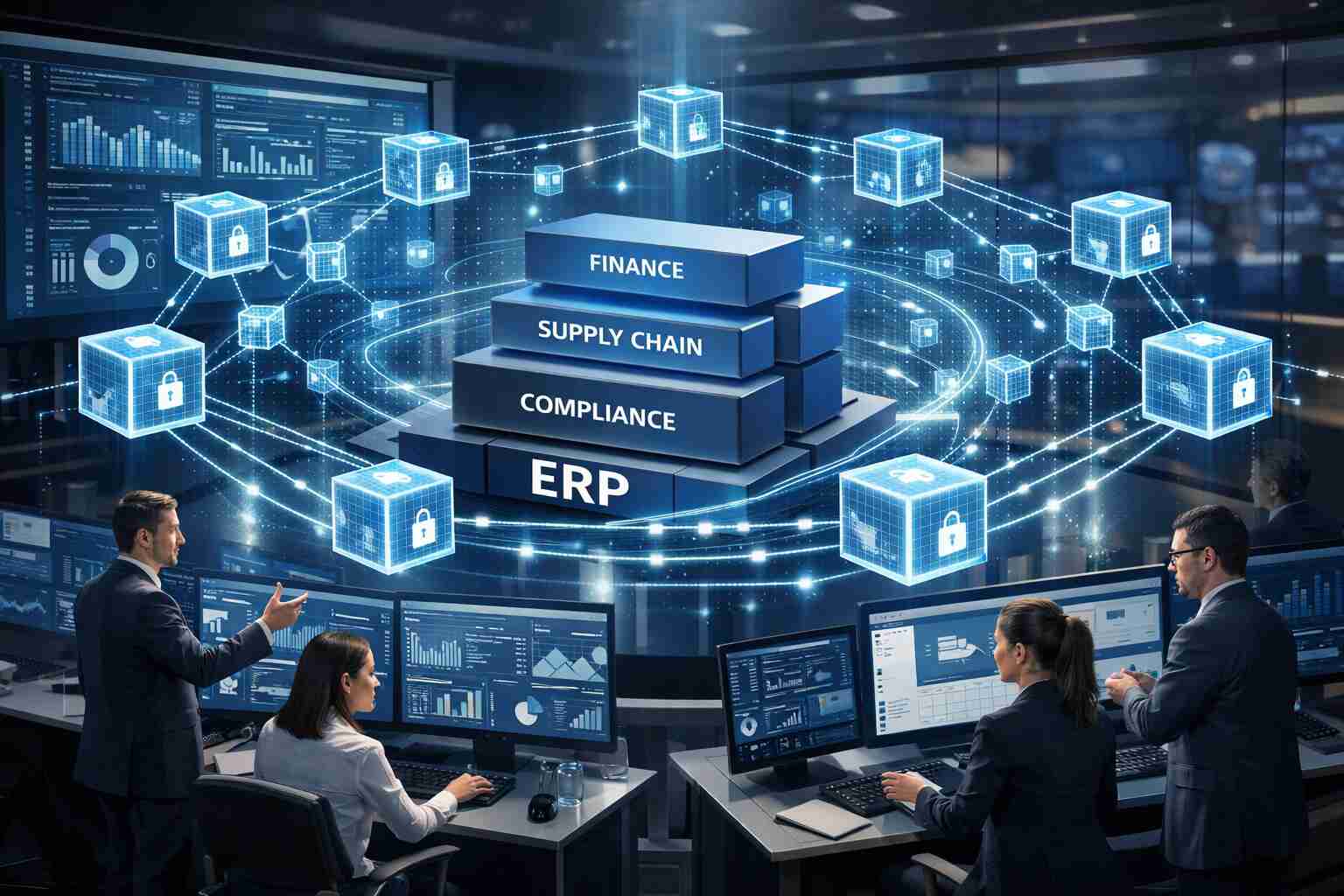

    Blockchain Technology Inspired Accely Business Solutions

      Modern enterprises now operate across borders, partners, and platforms. In this environment, centralized ERP systems face growing pressure to prove data accuracy, trace transactions across organizational boundaries, and maintain trust among stakeholders. This is where blockchain principles, and infrastructure concepts begin to intersect with ERP. Accely business solutions partner positions itself at this junction, helping enterprises extend ERP systems beyond traditional boundaries without abandoning their core strengths.

      Blockchain as Infrastructure, not Speculation

      Blockchain is often misunderstood as synonymous with cryptocurrency. In enterprise contexts, however, its value lies in architectural concepts:

      • Immutable records
      • Distributed verification
      • Transparent data flows

      These principles align closely with what ERP systems aim to achieve, accurate records, reliable processes, and compliance-ready reporting.

      Instead of replacing ERP, blockchain-inspired architectures complement it. Distributed ledgers can act as verification layers that reinforce ERP data, ensuring transactions cannot be altered without traceability. For industries where audit trails and regulatory compliance are critical, this adds a layer of assurance that centralized databases alone struggle to provide. Accely approaches blockchain not as a disruptive novelty, but as an architectural enhancement that strengthens ERP foundations.

      Strengthening Auditability and Process Integrity

      Auditability has always been a core ERP objective. Financial postings, inventory movements, and approval workflows must be traceable and defensible. Yet as data flows between suppliers, logistics partners, and customers, gaps can emerge. Blockchain-inspired systems address this challenge by creating tamper-resistant records that multiple parties can independently verify.

      Accely business solutions partner helps organizations design ERP environments where critical events, such as supply chain handoffs or compliance checkpoints are reinforced through distributed verification mechanisms. This does not mean duplicating ERP data, but anchoring key records to immutable references. The result is stronger process integrity, reduced dispute resolution time, and higher confidence in reported outcomes.

      Enabling Cross-Organizational Collaboration

      Modern enterprises rarely operate in isolation. Supply chains, manufacturing networks, and service ecosystems depend on shared data across organizational boundaries. Traditional ERP systems excel internally but often rely on integrations, reconciliations, and trust assumptions when data moves externally.

      Blockchain-inspired architectures introduce shared verification without forcing full system unification. Partners can validate transactions without exposing proprietary ERP data. Accely leverages this model to help enterprises collaborate securely while preserving system autonomy.

      Accely’s Role as a Strategic Modernization Partner

      Accely providers are positioned not as a technology vendor chasing trends, but as a strategic integrator translating emerging infrastructure concepts into practical enterprise value.

      By understanding both ERP architecture and distributed system design, Accely helps organizations modernize without destabilizing mission-critical systems.

      This role is especially important as enterprises balance innovation with compliance and operational continuity. Blockchain principles are powerful, but only when applied selectively and purposefully. Accely guides enterprises in identifying where immutable records, distributed verification, and transparent data flows add measurable value, whether in compliance reporting, supply chain visibility, or cross-entity coordination.

      Bridging Trust, Technology, and Enterprise Scale

      The shift from traditional ledgers to distributed systems is not a rejection of ERP, but an evolution of it. ERP remains the operational backbone of enterprises, while blockchain-inspired architectures enhance trust, resilience, and collaboration.

      By aligning ERP goals with distributed system principles, Accely enables organizations to strengthen data trust, improve audit readiness, and collaborate more effectively across complex ecosystems.

      Blockchain Technology and Buying Reddit Comments for Your Business

        Blockchain technology continues to grow across many industries. It is often linked to cryptocurrency, but it is much bigger than that. Many brands now use blockchain tools to improve security, trust, and transparency in their operations. At the same time, more companies are turning to Reddit as part of their marketing plan and they buy Reddit comments for your business. Buying Reddit comments has become a strategy to help brands increase visibility and build social proof. When used with care, it can help support your online presence and attract more customers.

        Blockchain Technology in Simple Terms

        Blockchain is a digital system that stores information in a safe and transparent way. Think of it as a shared online record book. Every time something is added to this book, the entry is locked and cannot be changed. Many users hold a copy of the record, so no single person controls it. This setup makes it hard for anyone to cheat or alter the data.

        The system works through blocks of data. These blocks connect to each other like a chain. Each block stores information about a transaction or action. Because each block is linked, you can trace the entire history. This makes the system strong and trustworthy.

        The main benefit of blockchain is transparency. Anyone inside the network can verify the data. This reduces fraud and errors. It also limits the need for middlemen. Many industries now explore blockchain tools to improve traceability and reduce costs. Healthcare uses it for patient records. Logistics uses it to track shipments. Retail uses it to confirm product authenticity. All these examples show that blockchain is not about trading coins. It is about creating secure and reliable systems.

        How Businesses Use Blockchain Today

        Businesses apply blockchain in different ways. Some use it to build stronger supply chains. A product can be tracked from the manufacturer to the buyer. This helps prevent fake or harmful goods from entering the market. It also makes the process more efficient.

        Some companies use blockchain to protect contracts. A “smart contract” is a digital agreement. It follows rules set by the parties and runs automatically. This reduces delays and mistakes. It also makes the process fair for everyone involved.

        Blockchain also helps protect data. Many users want safe ways to store personal information. The system makes it harder for hackers to access or change records. This gives customers peace of mind and improves brand trust.

        Another use is identity protection. Many online tools now require verification. Blockchain helps keep this information private while still proving that it comes from a real person.

        These examples show why many brands adopt blockchain in their daily operations. The technology supports efficiency, trust, and accountability.

        Why Businesses Buy Reddit Comments

        Reddit is one of the largest online communities. People use it to ask questions, share experiences, learn about products, and give recommendations. Because of this, many businesses want to be part of the conversations happening on the platform. One strategy they use is buying Reddit comments.

        Buying comments helps a brand gain visibility in active discussions. It allows a business to place helpful comments under relevant posts. These comments can explain a product, share details, or support someone’s question. When done properly, the comments appear natural and helpful. This creates a positive impression on readers.

        Some brands use this strategy to build social proof. People trust content from other users more than direct ads. A well-placed comment can increase curiosity, encourage clicks, and lead to more sales. Reddit users value honest insights. When the comments highlight real benefits or answer concerns, readers pay attention.

        Businesses also use Reddit comments to boost their engagement. Many threads rank higher when they have more activity. This helps more users discover the post, which can increase traffic to the business page or website.

        𐌢