Can Blockchain Technology Improve Transparency in Smartphone Manufacturing?
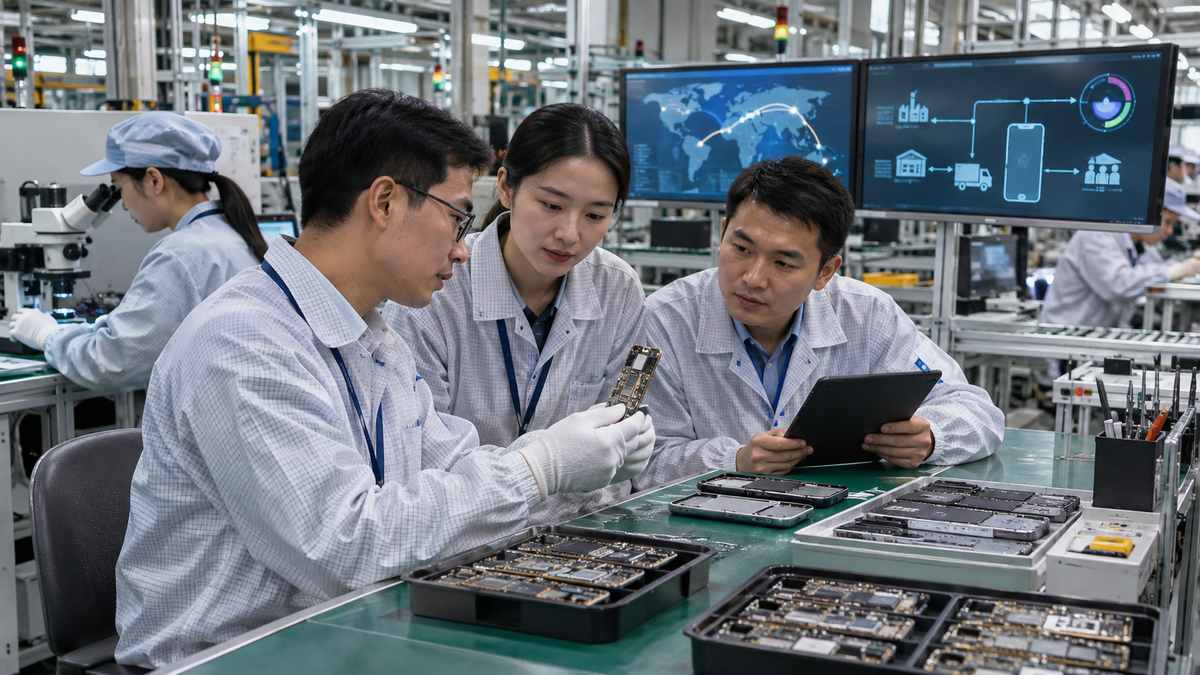
Smartphone manufacturing depends on global supply chains that connect mining companies, component manufacturers, assembly facilities, and distributors. A single device contains processors, batteries, displays, cameras, and materials sourced from different countries. This complexity makes verifying component origins, product authenticity, and environmental practices difficult. Manufacturers must coordinate with numerous suppliers while maintaining consistent quality and accountability.
Consumers usually see the finished product rather than the manufacturing process behind it. A phone comparison platform helps buyers examine technical specifications, including processors, memory, cameras, and battery capacity. However, these details reveal little about where components originated or how they were produced. Blockchain technology could help address this information gap by creating traceable manufacturing records.
Why Smartphone Supply Chains Are Difficult to Track
Smartphone production involves several manufacturing stages. Raw materials undergo extraction and processing before becoming electronic components. Those components then move through assembly, testing, packaging, and distribution.
Each stage introduces additional suppliers and records. Tracking materials across these organizations becomes challenging when companies use different reporting systems.
Research published by the Organisation for Economic Co-operation and Development (OECD) and the International Energy Agency (IEA) in 2025 highlights the importance of traceability in critical mineral supply chains. Their findings suggest that reliable tracking systems can support responsible sourcing, provided companies maintain accurate information and effective verification procedures.
Environmental accountability adds another challenge. Manufacturers must consider resource consumption, waste management, and the origins of materials used in electronics.
How Could Blockchain Change Manufacturing Records?
Blockchain is a distributed digital ledger that allows authorized participants to record and verify transactions. Information is stored in linked blocks, making unauthorized changes easier to detect.
The National Institute of Standards and Technology (NIST) describes blockchain as a tamper-resistant recordkeeping system that can support applications beyond cryptocurrency, including manufacturing and supply chain management.
Smartphone manufacturers could apply this technology in several ways.
Recording Component Origins
Suppliers could register component batches and associated manufacturing information. These records might include material sources, production facilities, certification details, and shipment dates.
Manufacturers could then trace selected components through participating suppliers instead of relying entirely on disconnected documents.
Monitoring Production and Distribution
Blockchain systems could record important manufacturing milestones, including component transfers, quality inspections, and assembly completion.
Each recorded transaction would contribute to a shared history. Authorized participants could review that history when investigating discrepancies or verifying shipments.
Supporting Product Authenticity
Manufacturers could associate unique product identifiers with verified production records.
Distributors and authorized repair providers might use these records to check whether registered devices correspond to legitimate manufacturing information.
However, digital records alone cannot prove that a physical device has not been altered or replaced.
Greater Accountability Is Possible, but Verification Still Matters
Supporters argue that blockchain could make supply chain records more consistent and difficult to manipulate.
When several organizations maintain a shared ledger, manufacturers may gain better visibility into component movements. This could simplify certain audits and help identify discrepancies earlier.
Blockchain could also improve the documentation of responsible sourcing efforts.
The OECD emphasizes that mineral traceability should operate within broader due diligence systems. Reliable documentation can support risk assessments, but it cannot replace investigations into environmental or labor conditions.
This distinction matters because transparency requires more than access to records. Companies must establish whether the information is accurate and whether suppliers follow applicable standards.
A blockchain system could preserve inspection results, for example. Yet independent verification would still be necessary to determine whether those inspections were conducted properly.
Where Blockchain Falls Short
Despite these potential advantages, blockchain introduces technical and operational challenges.
Implementation costs can be substantial. Manufacturers may need new software, system integration, employee training, and ongoing maintenance.
Data accuracy remains another concern. A tamper-resistant ledger can preserve incorrect information when suppliers submit inaccurate records.
Interoperability creates further difficulties. Suppliers often use different databases, reporting formats, and identification systems. Coordinating these systems requires agreed technical standards.
Physical verification presents perhaps the most important limitation. A recorded shipment of certified batteries does not automatically establish that every battery inside matches its digital record.
Reliable tracking still depends on inspections, secure identifiers, supplier cooperation, and independent audits.
These limitations suggest that blockchain should support existing verification methods rather than replace them.
What Would Consumers Actually Gain?
Most smartphone buyers prioritize performance, price, battery life, camera quality, and software support.
Device comparison websites make these characteristics easier to evaluate. Blockchain-based sourcing records could eventually provide another layer of information.
For example, accessible manufacturing records might help consumers understand whether certain materials have documented origins or whether relevant certifications have been verified.
However, presenting detailed supplier records to ordinary buyers would require clear explanations and consistent standards.
The European Commission introduced smartphone ecodesign and energy labeling requirements in June 2025. These measures address durability, repairability, battery performance, and product information.
Such regulations demonstrate that consumer transparency can improve through established reporting and labeling systems without requiring blockchain adoption.
Can Conventional Systems Deliver Similar Results?
Traditional supply chain databases already support inventory management, shipment tracking, and supplier documentation. However, some manufacturers are exploring ways to strengthen these systems through distributed verification.
The concept of blockchain-inspired enterprise systems illustrates how existing business software can incorporate tamper-resistant records and shared verification methods without replacing established databases.
Such approaches could help manufacturers improve traceability while maintaining their current operational systems.
The Responsible Minerals Initiative (RMI) also provides standardized reporting templates that help companies exchange information about mineral origins and processing facilities.
These existing approaches offer practical benefits. They can be less complicated to implement, particularly when companies already maintain reliable centralized databases.
Blockchain may provide additional value when independent organizations need shared records without relying on one administrator.
Still, its usefulness depends on the problem being addressed.
A manufacturer with effective supplier databases, independent certification, and strong auditing procedures may achieve comparable transparency without introducing distributed ledger technology.
Transparency Depends on More Than Technology
Blockchain technology could improve smartphone manufacturing transparency by strengthening record integrity and supporting component traceability. Its greatest potential lies in situations where multiple suppliers need consistent, shared information.
However, digital records cannot independently verify physical materials, environmental claims, or working conditions.
Future improvements will likely depend on combining reliable data systems, supplier accountability, independent inspections, and clear reporting standards.
Ultimately, the important question is whether a tracking system produces trustworthy information. Blockchain offers one possible approach, but responsible manufacturing depends more heavily on accurate evidence and meaningful oversight than on the technology used to store records.